 Tinkercaster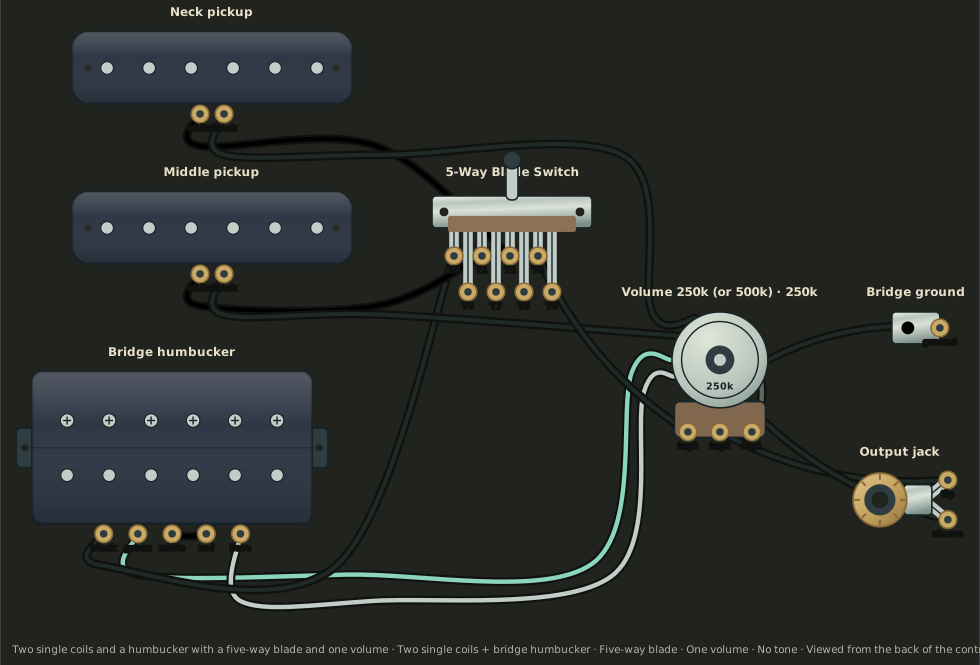
Parts and values
| In the drawing | Value | Part |
|---|---|---|
| Neck pickupSource: Neck single coil | — | Single-coil pickup (two-conductor)Generic |
| Middle pickupSource: Middle single coil | — | Single-coil pickup (two-conductor)Generic |
| Bridge humbucker | — | Humbucker (four-conductor, Seymour Duncan colours)Generic |
| 5-Way Blade SwitchSource: 5-way switch | — | Oak Grigsby 5-WayExample part |
| Volume 250k (or 500k) | 250k | CTS 250k Audio PotExample part |
| Output jackSource: Output Jack | — | Switchcraft #11Example part |
| Bridge ground | — | Bridge ground wireGeneric |
“Example part” means any part with the same value and lugs will do; the source does not name a brand. “Generic” stands in for an unspecified pickup: check your own pickup's lead colours before you solder.
Specific to this wiring
- The source gives the volume as 250k (or 500k); the board uses 250k.
- On the humbucker, solder the red and white wires together and tape them off.
- The humbucker's black lead ('bridge black') and the neck and middle white leads go to the blade; the blade's common goes to the volume input.
- The neck and middle black leads, the humbucker green and bare, the jack sleeve and the bridge ground all end on the volume's solder spot.
- Source note: if your neck and middle pickups are Fender pickups, you will need to reverse the green and black wires on the Duncan.
- The source legend marks the grey 'Solder' spot as the location for ground (earth) connections.
- The blade lugs are not numbered in the source; they are mapped by what they do (bridge, middle, neck, common). Only one side of the blade is wired.
Understand this wiring
- Seymour Duncan humbucker wire colors
See the pickup, recognise its two halves, and learn where each coloured wire goes.
Connections
In soldering order: grounds first, then the switch, the pickups and the signal path. Choose Show to highlight a connection in the drawing.
| # | From | To | How | Drawing |
|---|---|---|---|---|
| 1 | Humbucker green | Volume casing | To a pot casinggreen | |
| 2 | Humbucker bare | Volume casingDrawn grey beside the green. | Shield or groundbare | |
| 3 | Neck black | Volume casing | To a pot casingblack | |
| 4 | Middle black | Volume casing | To a pot casingblack | |
| 5 | Volume third lug | Volume casingLug bent up into the solder spot. | To a pot casing | |
| 6 | Volume casing | Jack sleeve | Wireblack | |
| 7 | Bridge ground | Volume casing | Shield or groundblack | |
| 8 | Humbucker black ('bridge black') | Blade top lug (bridge) | Wireblack | |
| 9 | Middle white | Blade third lug (middle) | Wirewhite | |
| 10 | Neck white | Blade second lug (neck) | Wirewhite | |
| 11 | Blade common lug | Volume input lug | Wireblack | |
| 12 | Humbucker red | Humbucker whiteSoldered together and taped. | Joined and insulatedred | |
| 13 | Volume middle lug | Jack tip | Wireblack |
What each position does
| Setting | The source | Engine result |
|---|---|---|
| Bridge humbucker | — | Bridge humbucker (both coils). |
| Bridge humbucker + middle | — | Middle pickup and Bridge humbucker (both coils) in parallel. |
| Middle | — | Middle pickup. |
| Middle + neck | — | Neck pickup and Middle pickup in parallel. |
| Neck | — | Neck pickup. |
Checked with the Tinkercaster wiring engine against the switching the source describes.
- Hum cancelling and phase describe the generic pickup models, not a measurement of any specific pickup.
- Pickup resistance is not specified, so no numeric meter readings are given.
- Only the 250k volume value is simulated; the source's 500k option is not.
Before you solder
Ticks are kept in this browser only, as a reminder. They are not a check of your joints. New to soldering? Read the soldering cheat sheet.
Check before plugging in
- In each blade position the meter across the jack should read the selected pickup, or the two pickups in parallel in positions 2 and 4.
- The taped red–white joint should read open to ground.
Measure across the output jack with a multimeter on its resistance range. No exact readings are given where the source does not specify the pickups.