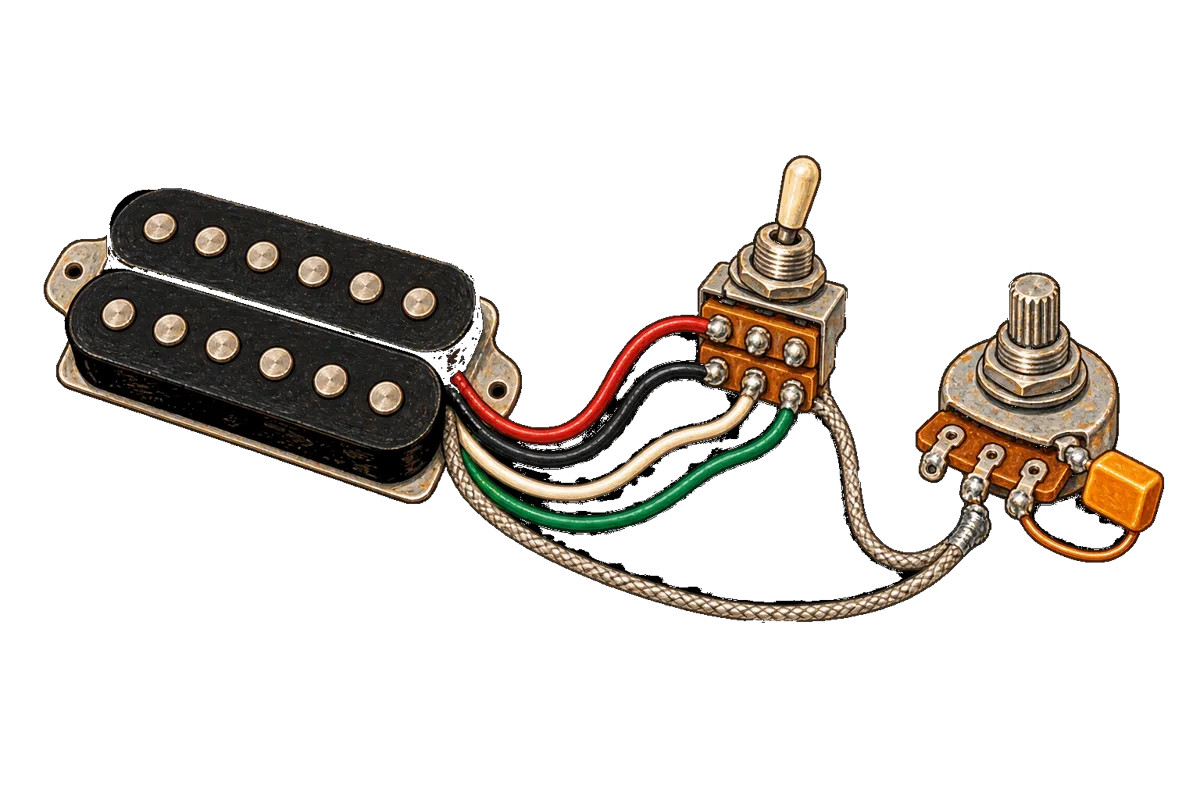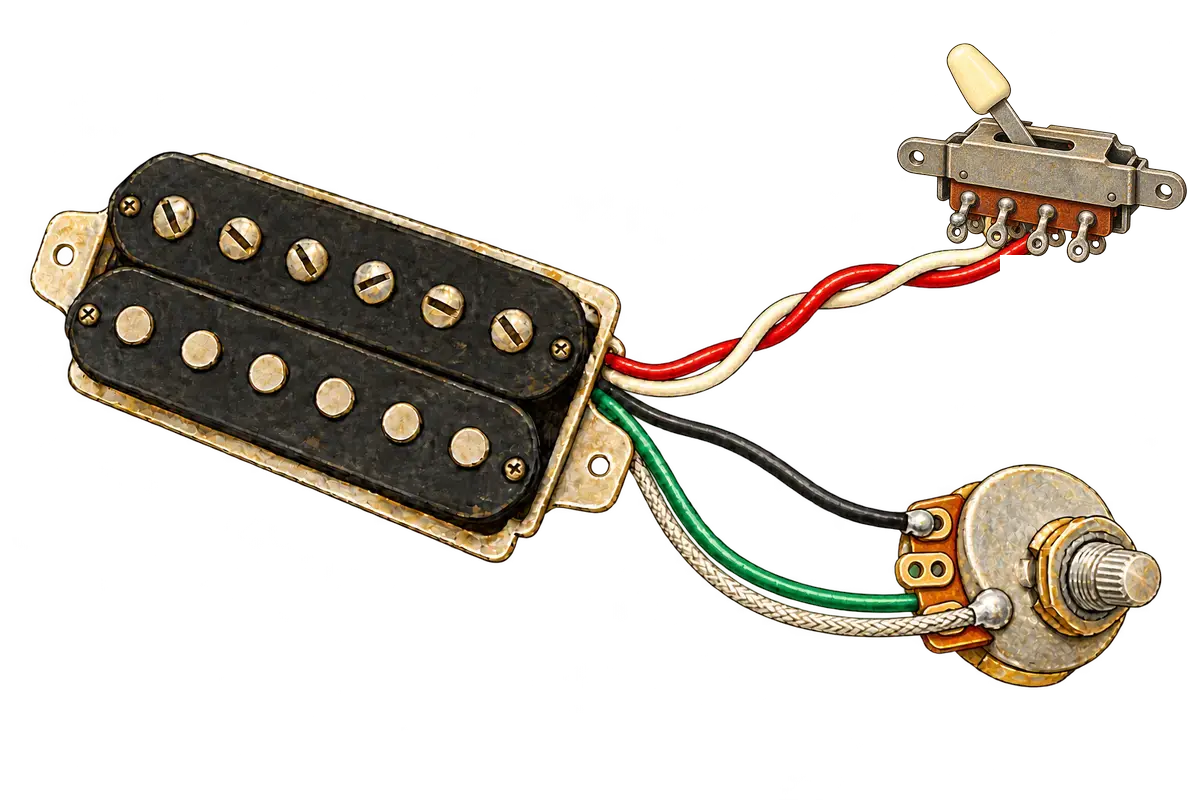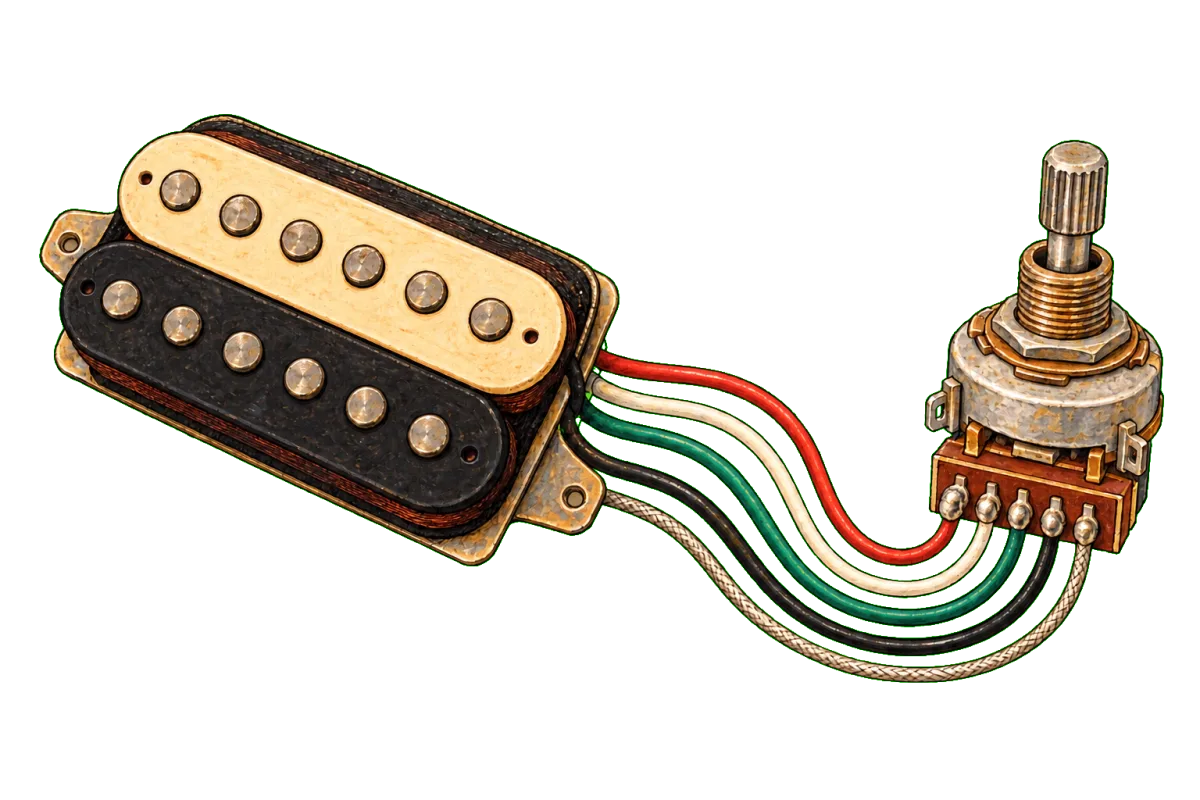
How to wire a Seymour Duncan Triple Shot ring
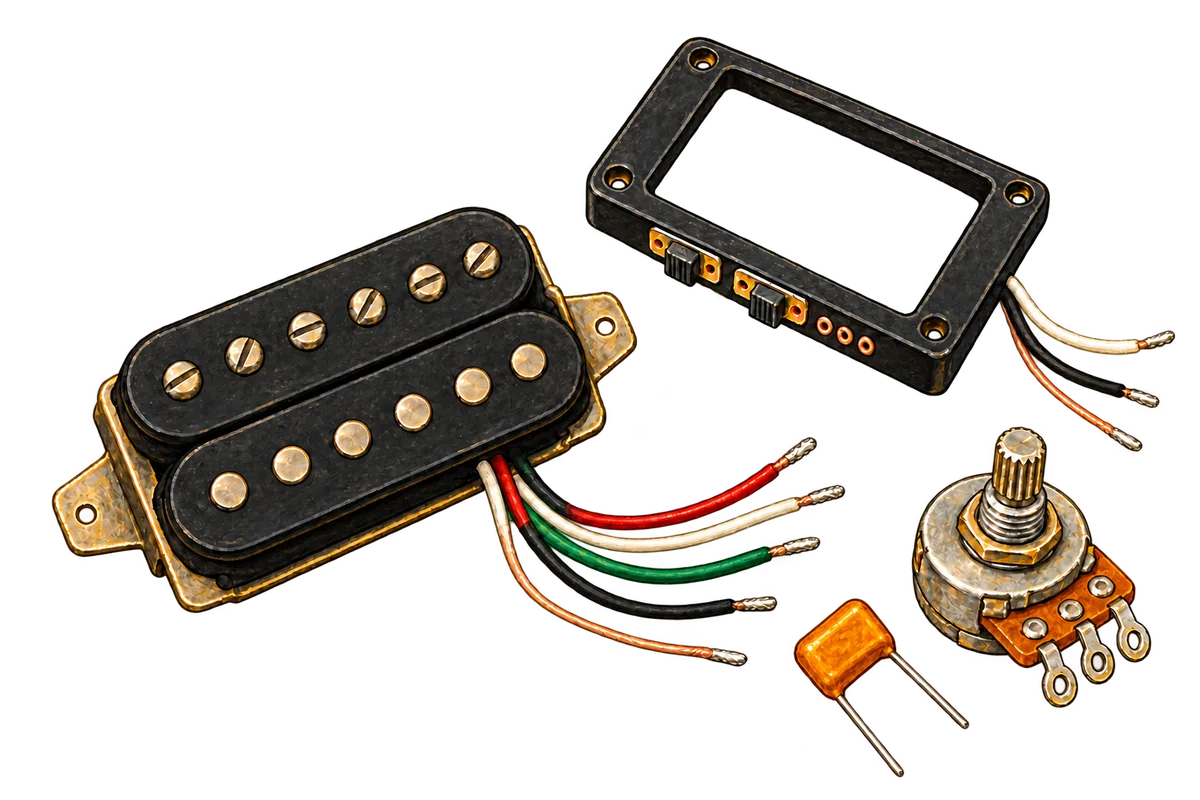
Solder all five humbucker leads to the ring's pads, then run the ring's white, black and bare cable to the controls. One and two humbuckers, toggle and phase push/pulls.
 Tinkercaster
Guitar wiring, explained at the bench. Ideas, answers and practical help for the project in front of you.
Follow via RSS ↗ Understand the connections. Then make them.
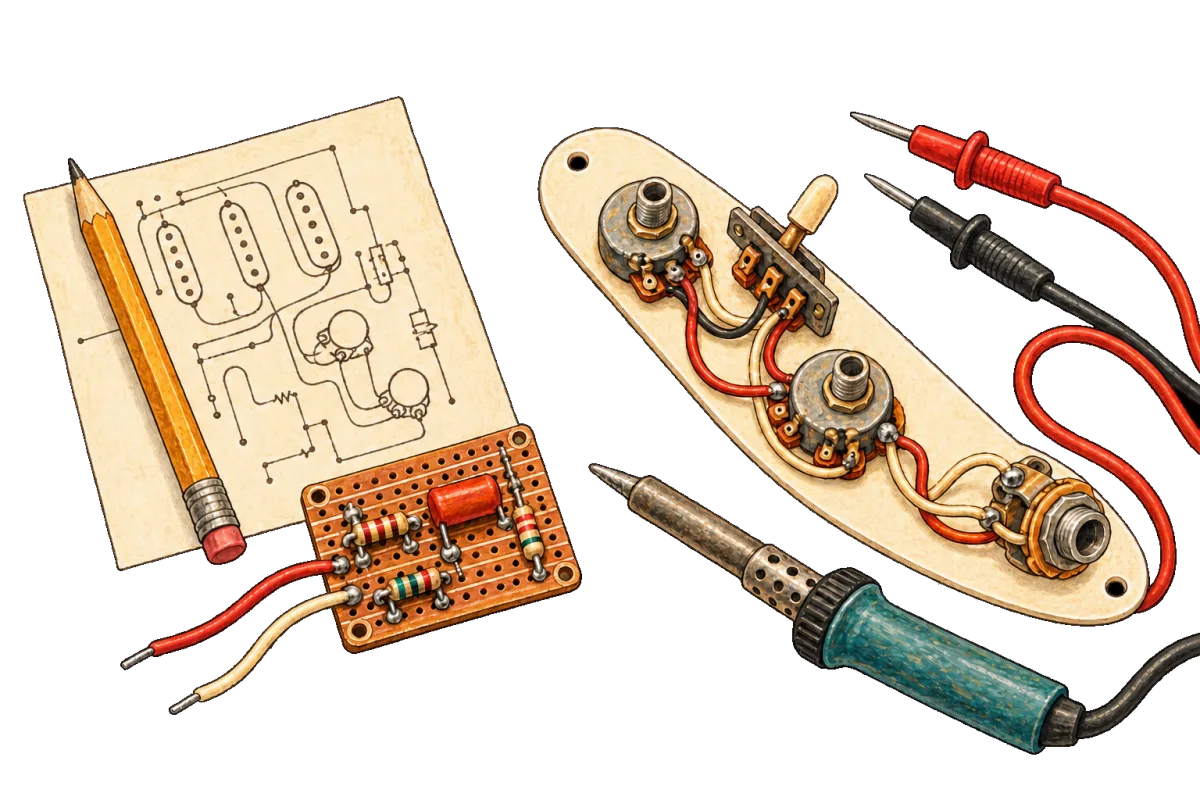
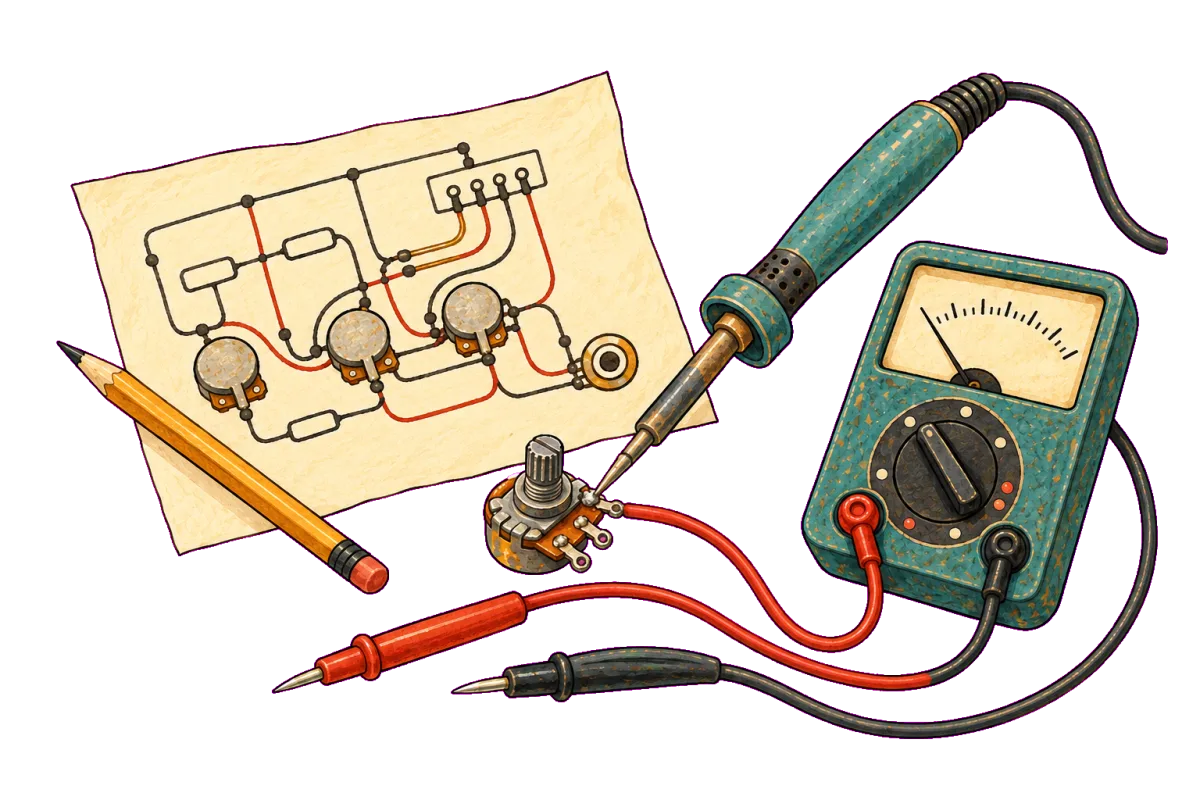
A drawing shows the finished circuit. Here’s how Tinkercaster helps you plan the wiring, understand the connections, and work through the build step by step.
Read the storyFind something for your next project.
22 articles
Solder all five humbucker leads to the ring's pads, then run the ring's white, black and bare cable to the controls. One and two humbuckers, toggle and phase push/pulls.
A humbucker in the neck and a Tele single coil in the bridge on a three-way blade: the Tonerider and DiMarzio sheets lead by lead, with the colours that differ.
One split-coil pickup, one volume, one tone: DiMarzio's and Tonerider's P-Bass sheets lead by lead, then the two-volume, master-tone layout for Jazz and PJ basses.
How DiMarzio wires a Dual Sound DP101 humbucker to an on-on-on mini toggle for parallel, split and series, lead by lead, with the volume, tone and jack connections.
How to wire the Everything Axe set on a Strat five-way: why the middle Duckbucker runs in parallel, the volume-only, one-tone and two-tone sheets lug by lug, and what to meter.
Four Seymour Duncan ways to split a humbucker on a Strat five-way blade: the position 2 auto-split, push/pull for HSS and HSH, and a two-humbucker blade split, with meter checks.
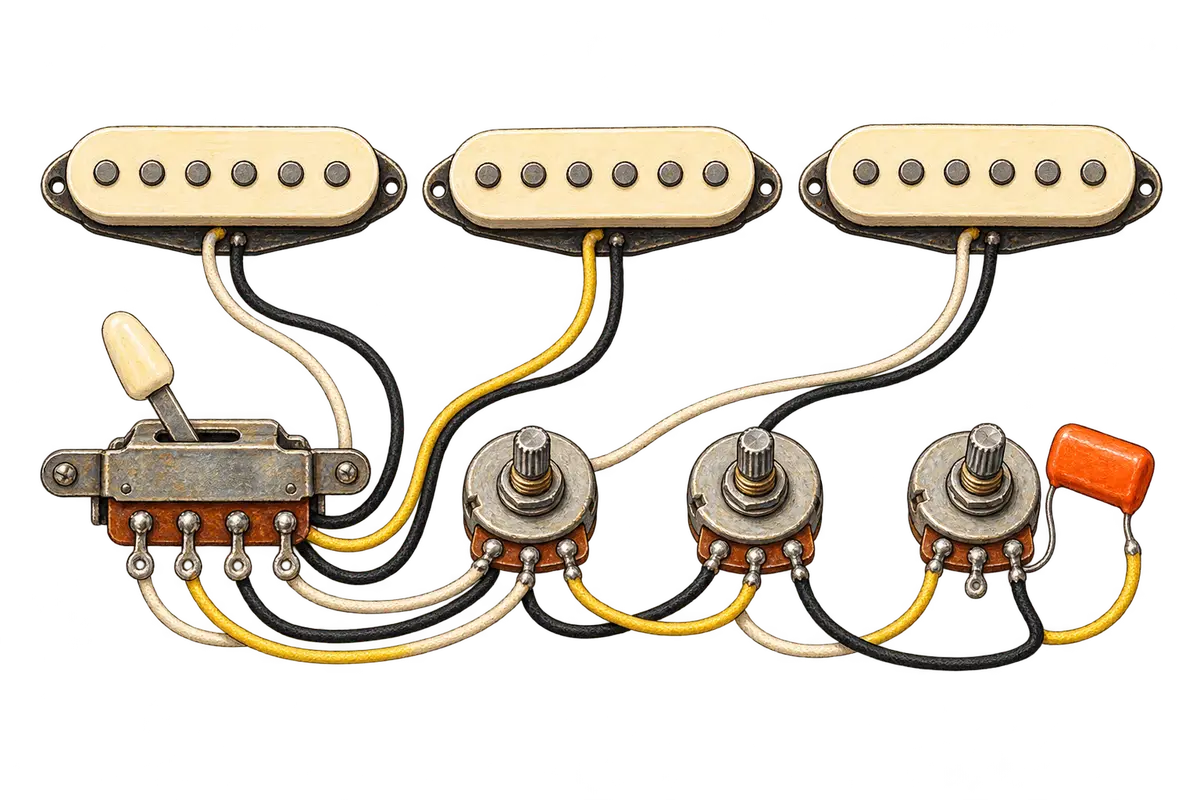
Every lug on a Strat five-way blade, traced through Tonerider's standard Strat harness: which pickups each position joins, why the bridge has no tone, and what to meter.
DIYLC is a free, open-source desktop layout tool for many kinds of electronics. Tinkercaster is a browser-based guitar wiring editor and simulator. Here’s how to choose.
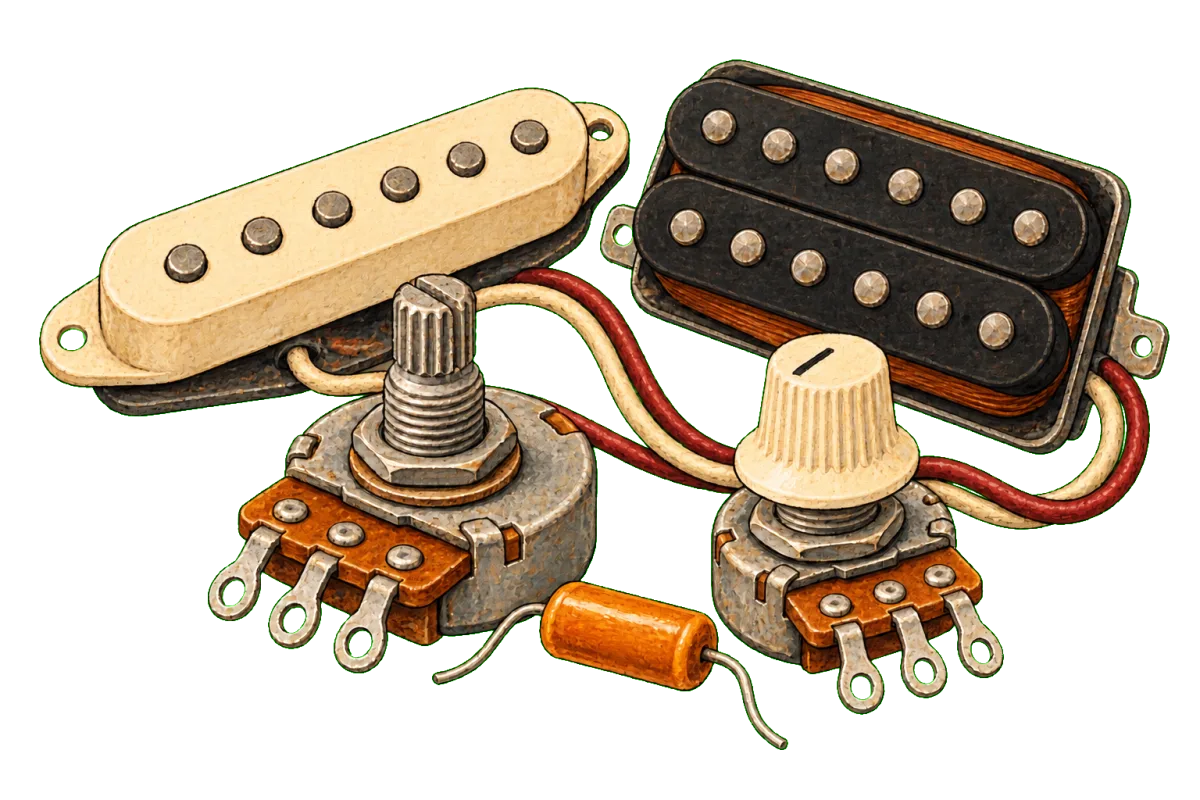
Pot value is a load on your pickup's resonant peak. What 330 library diagrams specify for single coils, humbuckers, P90s and actives, how to read a CTS part number, and when to break the rule.
How a humbucker coil split works, lug by lug on a push/pull, from Seymour Duncan, Tonerider and DiMarzio sheets: which coil each maker keeps, split vs tap, partial splits and meter checks.
A drawing shows the finished circuit. Here’s how Tinkercaster helps you plan the wiring, understand the connections, and work through the build step by step.
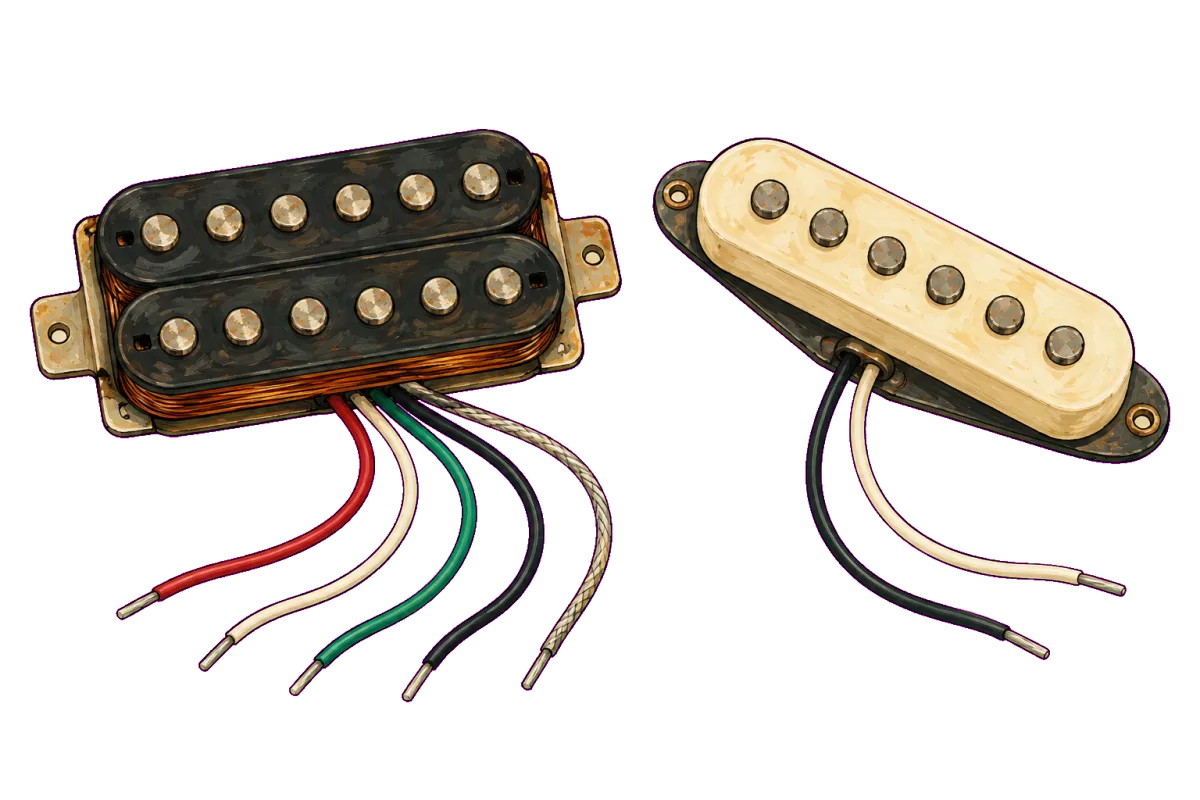
Gibson and Fender codes from their own wiring sheets, the Seymour Duncan, DiMarzio, Tonerider and Fralin 4-conductor codes, where the charts disagree, and how to identify unknown leads with a meter.
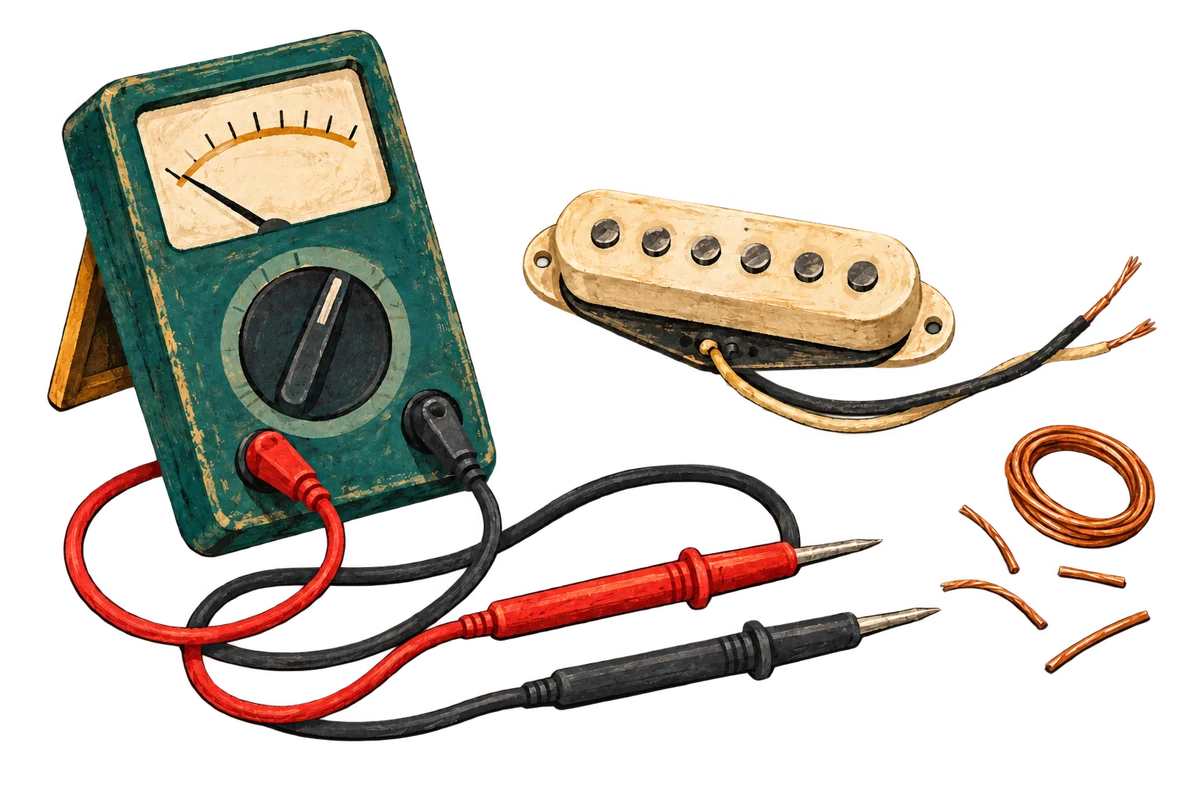
Isolate a silent pickup to the coil, switch, pot or jack with the meter readings our wiring diagrams specify, maker DC resistance specs, series link checks and active battery tests.
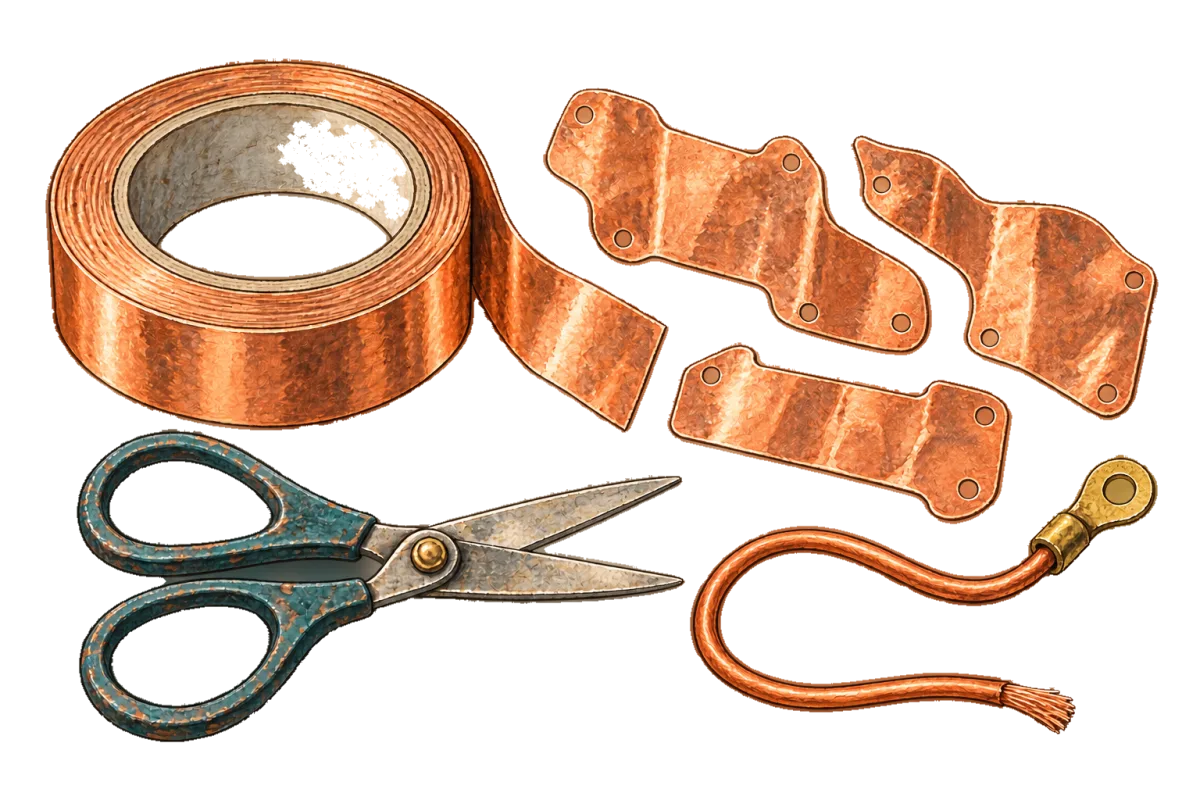
Copper tape versus conductive paint, how to make every seam conductive, where the single ground connection goes on a Strat pickguard or Tele plate, and what shielding cannot fix.
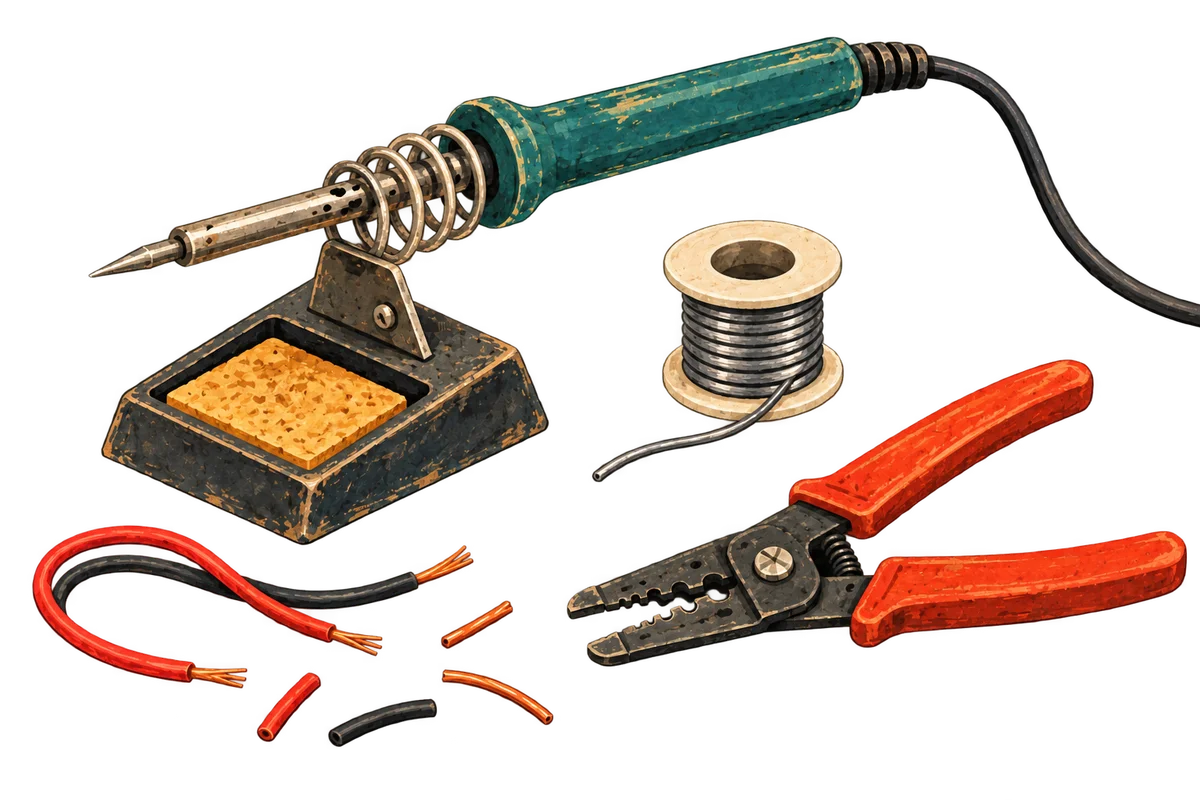
The five joints every passive harness uses, from pot-casing grounds to switch lug jumpers, with Kester and Hakko temperature data and the meter checks that prove each one.
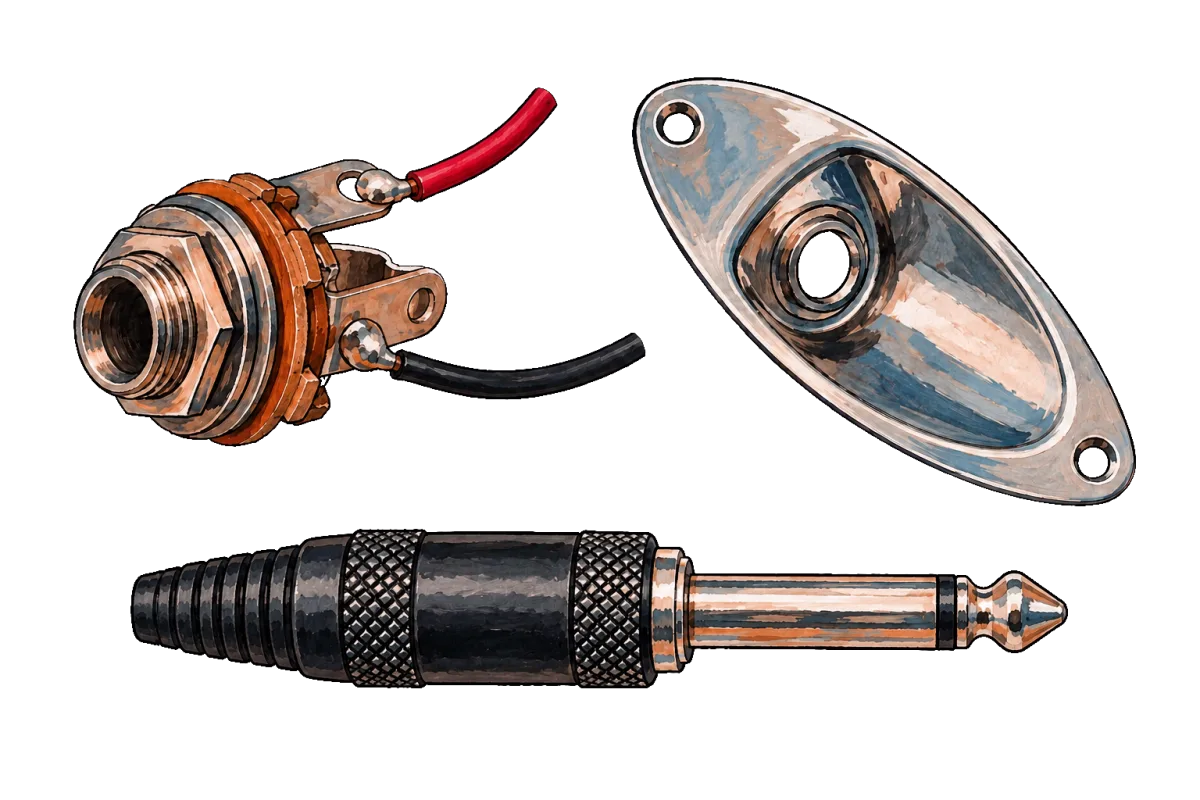
Tip and sleeve on a Switchcraft #11, the ring lug that switches an active battery on a #12B, how to identify lugs with a meter, and how to cure crackle and loose Strat and Tele jacks.
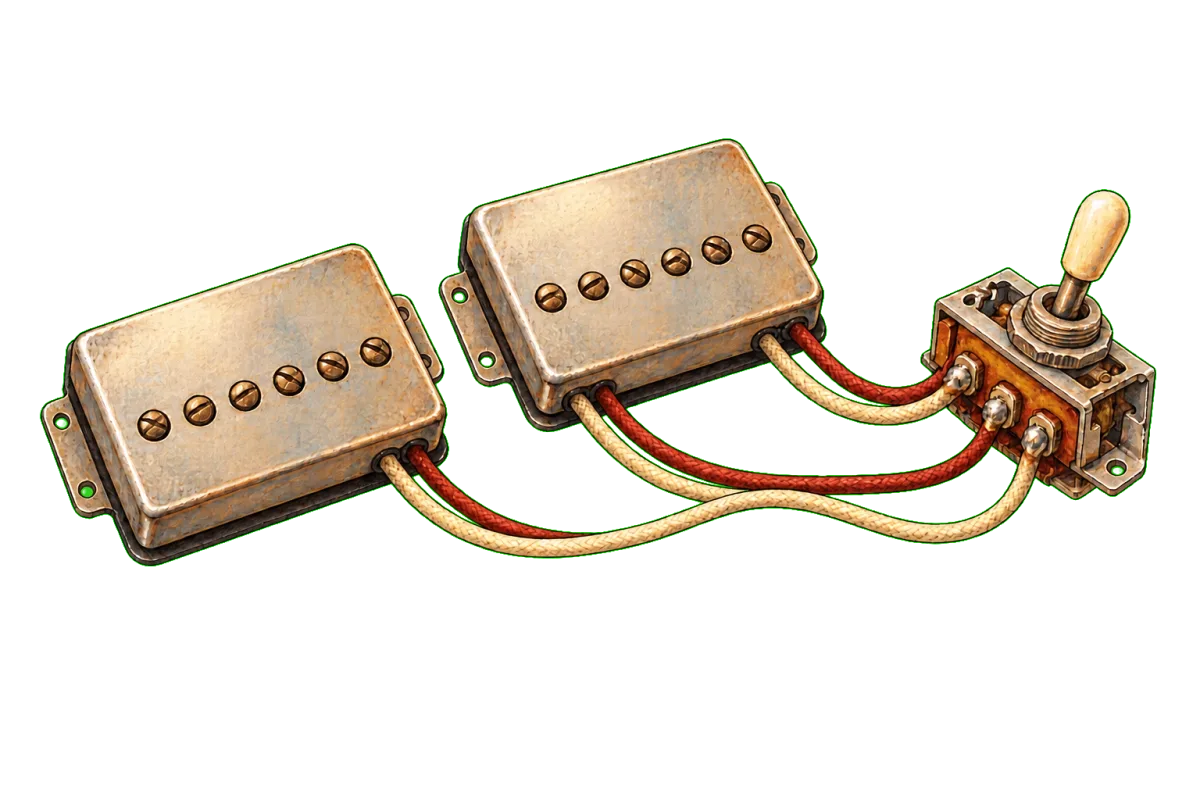
Lug-by-lug wiring for two humbuckers on a Switchcraft-style 3-way toggle, from Seymour Duncan, DiMarzio and Tonerider sheets: one volume, Les Paul 50s and modern, and meter checks.
The stock Jazzmaster runs two circuits: a lead circuit on a 3-way toggle with 1M pots, and a neck-only rhythm circuit on a slide switch. Fender's parts, values and checks.
P90 lead types by maker, soapbar vs dog-ear, and our Tonerider and Seymour Duncan P90 diagrams walked through: one pickup, two on a toggle, and P90 with a humbucker.
A connection-by-connection walk through Tonerider's four-way Tele harness: why the neck ground is switched, why the cover needs its own wire, and what to meter in each position.
What series and parallel do to two coils or two pickups: output, DC resistance, brightness and hum cancelling, with switching tables and meter readings from Seymour Duncan and Tonerider diagrams.
Separate magnetic single-coil hum from electric-field buzz and intermittent crackle, then prove every ground path to the jack sleeve with a meter, using the checks from our diagrams.
Try a different word or choose all topics.