 Tinkercaster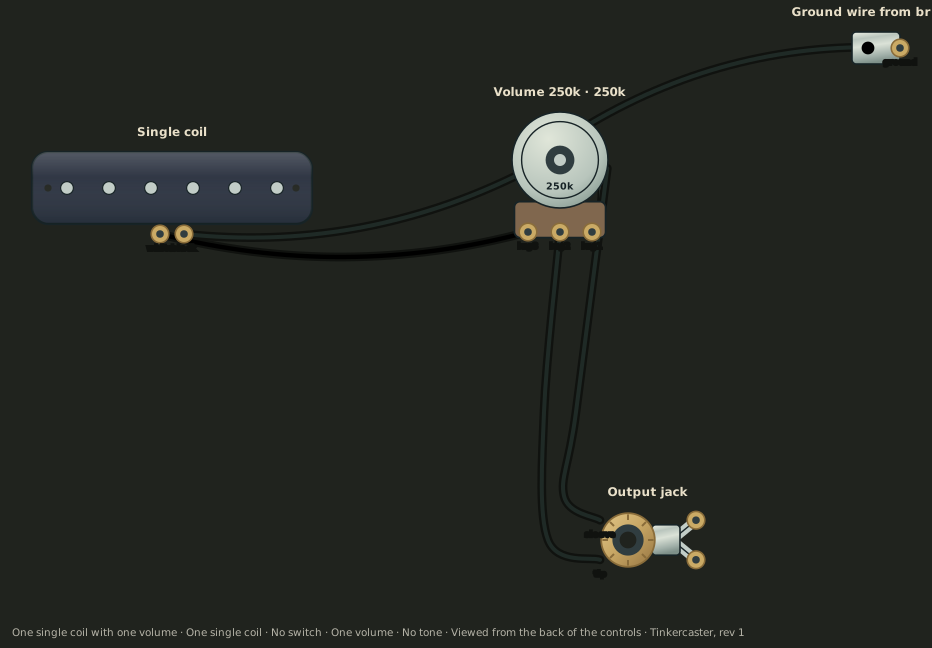
Parts and values
| In the drawing | Value | Part |
|---|---|---|
| Single coilSource: Single coil (white and black leads) | — | Single-coil pickup (two-conductor)Generic |
| Volume 250k | 250k | CTS 250k Audio PotExample part |
| Output jackSource: Output jack (tip and sleeve) | — | Switchcraft #11Example part |
| Ground wire from bridgeSource: ground wire from bridge | — | Bridge ground wireGeneric |
“Example part” means any part with the same value and lugs will do; the source does not name a brand. “Generic” stands in for an unspecified pickup: check your own pickup's lead colours before you solder.
Specific to this wiring
- The grey “Solder” spots on the volume casing are the ground points: the pickup's black lead, the jack sleeve and the bridge ground all end there.
- The volume's right lug is bent over and soldered to the casing.
Connections
In soldering order: grounds first, then the switch, the pickups and the signal path. Choose Show to highlight a connection in the drawing.
| # | From | To | How | Drawing |
|---|---|---|---|---|
| 1 | Bridge ground | Volume casing (upper solder spot)Drawn leaving the page towards the bridge. | Shield or groundblack | |
| 2 | Pickup black | Volume casing (lower solder spot) | To a pot casingblack | |
| 3 | Volume right lug | Volume casingLug bent onto the casing. | To a pot casing | |
| 4 | Volume casing | Jack sleeve | Wireblack | |
| 5 | Pickup white | Volume left lug (input) | Wirewhite | |
| 6 | Volume middle lug | Jack tip | Wireblack |
What each position does
| Setting | The source | Engine result |
|---|---|---|
| Always on | One pickup, no selector. | Single coil. |
Checked with the Tinkercaster wiring engine against the switching the source describes.
- Pickup resistance is not specified, so no numeric meter readings are given.
Before you solder
Ticks are kept in this browser only, as a reminder. They are not a check of your joints. New to soldering? Read the soldering cheat sheet.
Check before plugging in
- With the volume up, the meter across the jack should read the pickup's resistance.
- With the volume at zero, tip and sleeve should read as a short.
Measure across the output jack with a multimeter on its resistance range. No exact readings are given where the source does not specify the pickups.